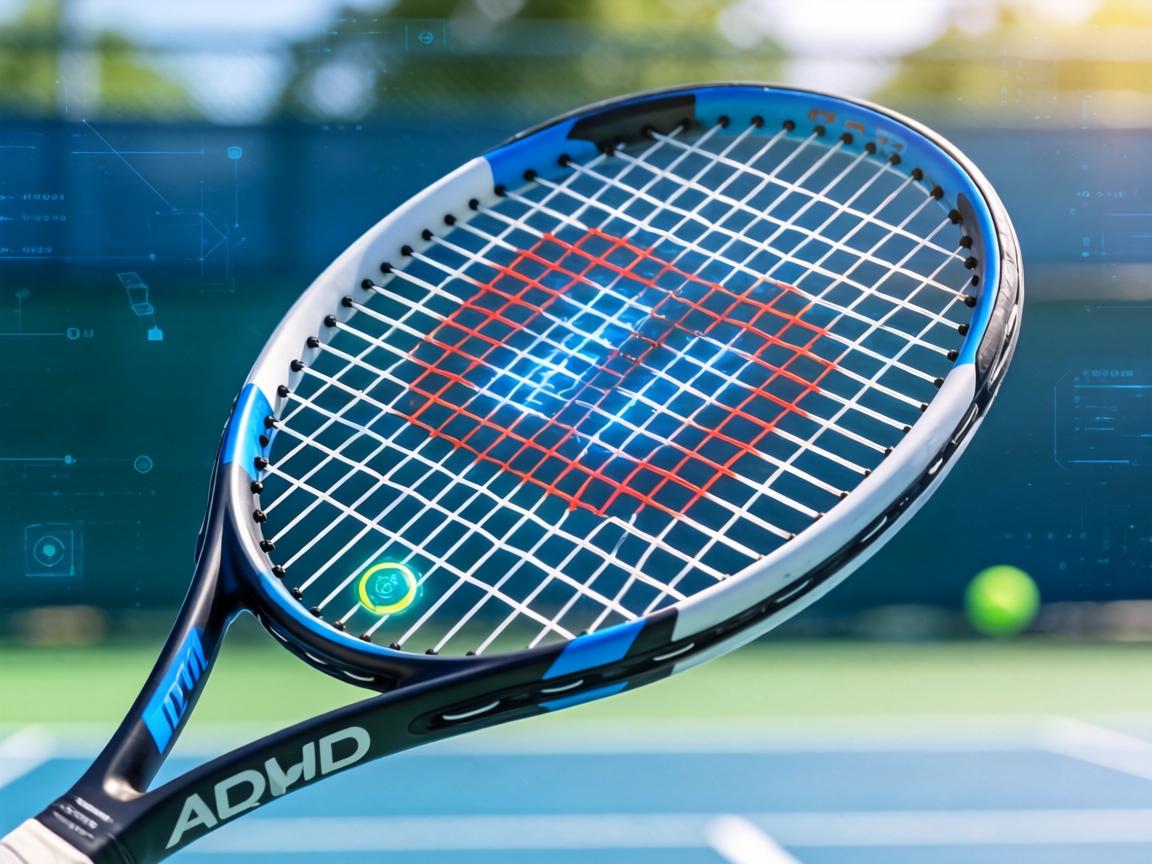
Guys, let’s be real for a second—when you watch a 130 mph forehand fly past a helpless defender at Indian Wells, do you ever stop and wonder how much of that is the player versus the gear? I mean, we’ve seen racket tech evolve faster than serve-and-volley died out, and a lot of fans ask whether these carbon fiber monsters are genuinely leveling up the game or just masking technical flaws.The head size debate
alone could fill a podcast episode. Back in the 1980s, players swung 85-square-inch frames. Now? 100+ is standard, with some pushing 107. What does this mean for the tour? Well, bigger sweet spots forgive off-center hits, which sounds great until you realize margins for error
might be training lazy footwork. I watched a challenger match last month where both guys stood five feet behind the baseline launching moonballs—zero net approach, zero creativity. Just… power baseline exchanges until someone missed long.Here’s what I think about the materials revolution, though. Graphene, basalt fibers, countervail technology
—manufacturers throw these terms around like they’re magic spells. From my view, the stiffness ratings matter more than marketing fluff. A racket with RA 70+ will give you free power on serves, sure, but good luck feeling the ball on drop shots. Most people don’t notice that professional stringers
on tour customize frames to player specs that retail buyers never access. Djokovic’s actual stick? Nothing like the PT2.0 you can buy online. Nothing.You might be wondering about the spin generation arms race. Polyester strings changed everything in the mid-2000s, and now RPM Blast, Luxilon Alu Power
—these are household names among club players chasing that Nadal kick. But let’s look at some numbers that matter:• Top 100 ATP players
: ~78% use polyester or hybrid setups
• Average string tension dropped 15%
since 2010 (more pocketing, more spin)
• Forehand RPMs increased roughly 35%
on clay surfaces compared to 1995 dataKeep reading, because this is where it gets interesting for recreational players. That same spin-friendly setup that lets pros bend trajectories? It destroys amateur elbows. I know three club champions who switched to multifilament after tennis elbow
diagnoses, and their games didn’t collapse—they actually placed balls better because they stopped over-hitting.The counter-argument
from equipment purists is worth hearing. Some coaches argue that technology homogenizes playing styles. When everyone can generate easy depth from defensive positions, why learn to construct points? You see this at junior levels now—kids with massive forehands who can’t volley because their rackets do the work from the backcourt. I’ve watched 14-year-olds at Orange Bowl hitting 95 mph groundstrokes
who look lost when someone chips and charges.But here’s the nuance most analysis misses: surface technology evolved alongside rackets. The acrylic hard courts
at most ATP 500s play slower than concrete did in the 90s. The balls are heavier, fluffier, designed for longer rallies. So is it the racket enabling 25-shot exchanges, or the court conditions? Probably both, feeding each other in this weird symbiosis that tournament directors love because TV audiences want drama, not 45-minute serve-fests.What about customization culture? This fascinates me. Lead tape, silicone in handles, leather grips—players are basically Frankensteining
their equipment now. I talked to a stringer at Miami Open who said mid-tier pros spend $8,000+ annually just on racket matching and customization. For context, that’s more than some challengers earn in prize money at smaller events. The obsession with swing weight
and balance points has created this sub-economy of specialists who never touch a tennis ball but influence match outcomes.Let’s address the elephant in the room: price points
. A flagship racket now runs $300+ unstrung. Add premium strings, custom grip work, and you’re pushing $400 for a recreational player’s setup. Compare that to 1995, when a quality graphite frame cost maybe $150 adjusted for inflation. Are we paying for performance gains or marketing campaigns featuring Carlos Alcaraz? The margins suggest the latter drives a lot of purchasing decisions.You might be wondering whether I’m anti-technology here. Not exactly. I switched to a 16×19 string pattern
racket two years ago and my kick serve actually developed bite it never had. The equipment can unlock potential—I’m just skeptical when manufacturers claim their latest “speed grommet” or “aero beam” will transform someone’s game overnight. Improvement comes from repetition, coaching, fitness
—the racket is just a tool that amplifies what’s already there.The environmental angle deserves mention too. Carbon fiber production isn’t exactly green, and the planned obsolescence
cycle (new models every 12-18 months) creates waste. Some boutique brands are experimenting with flax fiber and recycled materials
, but tour adoption remains minimal. When prize money depends on equipment deals, players won’t risk performance for sustainability—can’t blame them, but it’s a tension worth acknowledging.From my view, the sweet spot for most club players isn’t the newest release. It’s a 2-3 year old model
with established playability, strung with a hybrid setup that balances power and comfort. Spend the savings on lessons instead. I watched a 4.0 player drop $800 on matched rackets last season while refusing to fix his grip technique—predictable results followed.What does this mean for the tour long-term? If junior development keeps prioritizing power over craft, we might lose the variety that made tennis compelling. Remember when Santoro’s double-handed forehand
or McEnroe’s touch volleys
created stylistic matchups? Now every baseline exchange looks algorithmically similar. Technology enables this convergence, even if it doesn’t force it.So does modern racket tech help players win? At elite levels, absolutely—the margins are too thin to ignore any advantage. For the rest of us? It helps until it becomes a distraction from actual skill acquisition. The best equipment decision I ever made was sticking with one racket model for four years instead of chasing the upgrade cycle. Familiarity beats novelty more often than gearheads want to admit.Keep that in mind next time you demo six frames and can’t decide. Sometimes the problem isn’t the racket—it’s that we expect gear to solve problems that only court time can fix.