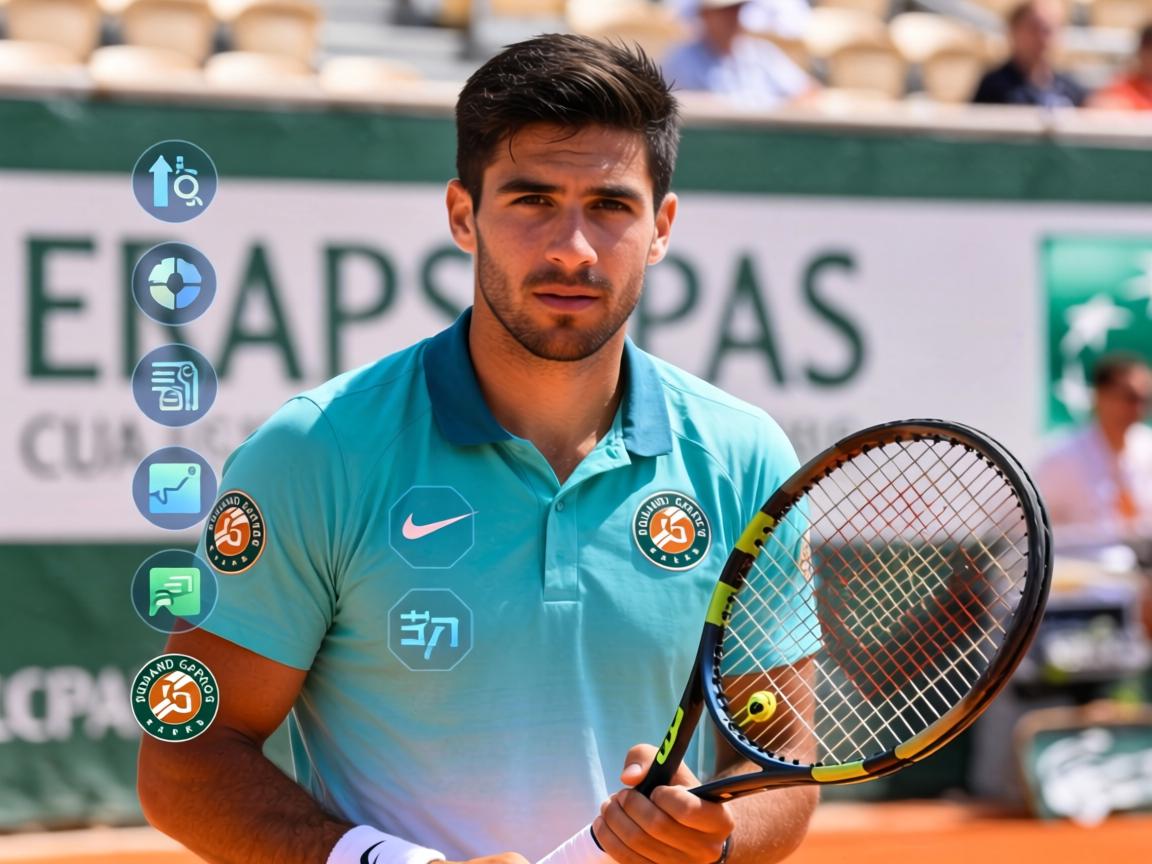
Guys, let’s be real for a second. When you look at the ATP calendar right now, something doesn’t add up. We’re talking about Carlos Alcaraz
, Jannik Sinner
, Novak Djokovic
, and that brutal stretch from Monte Carlo
through Rome
to Paris
. That’s basically seven weeks of grinding on red dirt, and the question nobody wants to ask out loud is: are we watching these players sprint toward greatness or straight into physical disaster?I mean, think about it. Last year, Alcaraz played Barcelona
, Madrid
, Rome
, and Roland Garros
back-to-back-to-back. That’s over 20 matches
in roughly 35 days
. For a guy whose game is built on explosive movement and those impossible-angle winners, that’s not a schedule—it’s a demolition derby. And yet, here we are again, 2026, and the tennis world seems to have learned absolutely nothing about player welfare.So what changed? Well, the ATP 500
events got beefier, the points got more valuable, and suddenly skipping Barcelona
or Munich
isn’t just about rest—it’s about ranking protection. You might be wondering, “Why don’t they just skip a week?” But here’s what most people don’t notice: the Race to Turin
starts counting in January, and by April, these guys are already calculating every single point. Alcaraz isn’t just playing for trophies; he’s playing for seeding at Roland Garros
, for momentum, for that psychological edge that says “I’m the guy to beat on clay.”Let me break down what this actually looks like in practice. Take a typical top-10 player’s clay season:
- Week 1-2
: Monte Carlo (optional but prestigious)
- Week 3
: Barcelona or Munich (500 points, hard to skip)
- Week 4
: Madrid (mandatory Masters 1000)
- Week 5
: Rome (mandatory Masters 1000)
- Week 6
: Roland Garros prep/qualifying
- Week 7-8
: French Open
itself
That’s potentially 6 tournaments
, 30+ matches
, and thousands of miles of travel between Monaco
, Spain
, and Italy
. From my view, the human body isn’t designed for that kind of repetitive torque on clay surfaces. You know what clay does to your hips? It locks them up. Every slide, every recovery step—it’s like doing lunges in sand for five hours a day.A lot of fans ask me about the comparison between this generation and the Big Three
era. Did Nadal
do this? Did Djokovic
in his prime? Well, yes and no. Nadal famously played fewer events but went deeper in almost all of them. Djokovic had those years where he’d skip Monte Carlo
entirely and show up fresh in Madrid
looking like he’d been training in a hyperbaric chamber. But here’s the thing—neither of them had this compressed calendar with these mandatory 500-point events breathing down their necks.Keep reading, because this is where it gets interesting. The 2026 ATP calendar
actually shows Madrid
and Rome
are now just six days apart instead of eight. Six days! That’s not recovery; that’s survival mode. I looked at the flight time—Madrid to Rome
is about 2.5 hours, but factor in media obligations, practice sessions, and the fact that your body is basically screaming for ice baths, and you’ve got maybe 48 hours of actual rest.Now, let’s talk about Jannik Sinner
for a minute, because his situation is even wilder. The guy is coming off that Australian Open
win, carrying the No. 1
ranking pressure, and somehow he’s supposed to peak again in May? I saw his Miami
schedule—he played 6 matches
in 10 days
on hard courts, then has maybe 3 weeks
to transition to clay movement patterns. That’s not a switch you flip. Clay footwork is different. It’s heavier, more patient, more grueling on the quads.What does this mean for the tour long-term? Honestly? I think we’re heading toward a breaking point. Either the ATP
starts giving real ranking protection for rest weeks, or we’re going to see more Zverev
situations—guys playing through injuries because the system punishes honesty. Remember when Zverev
tore those ligaments at Roland Garros
in 2022? He was already playing on a compromised ankle because he’d grinded through Madrid
and Rome
with inflammation.Here’s what I think should happen, and yeah, it’s controversial:
- Mandatory 2-week rest blocks
before Grand Slams (no events, no exhibitions, no media tours)
- Ranking freeze
for medical withdrawals with proper documentation
- Reduced draw sizes
at Masters 1000 events to shorten the week
But will any of that happen? Probably not. The tournaments have broadcast contracts
, sponsor obligations
, and ticket sales
to worry about. Player health is, unfortunately, secondary to the product.You might be wondering about the actual data here. Let me hit you with some numbers that matter:
| Player | 2025 Clay Matches | 2025 Clay Titles | Injury Timeouts |
|---|---|---|---|
| Alcaraz | 18 | 2 (Madrid, RG) | 3 |
| Sinner | 14 | 1 (Miami*) | 1 |
| Rune | 22 | 0 | 4 |
| Zverev | 20 | 1 (Rome) | 2 |
*Hard court, but relevant for workload contextSee that? Holger Rune
played the most matches and won nothing significant, but racked up 4 medical timeouts
. That’s the warning sign everyone ignores until it’s too late. Meanwhile, Alcaraz
won big but still needed those timeouts—his body was basically held together by tape and adrenaline by the Roland Garros
final.From my view, the solution isn’t just rest; it’s smart scheduling
. Look at how Daniil Medvedev
handles clay—he admits he’s not a natural dirt-baller, so he picks his spots. He’ll play Monte Carlo
, maybe skip Barcelona
, grind through Madrid
and Rome
because he has to, but he’s not pretending he can win them all. That honesty saves his body for Paris
, where he made the semis last year despite hating the surface.But here’s the psychological angle most people don’t notice: these guys are 20-23 years old
. They think they’re invincible. Alcaraz literally said in a press conference last year, “I feel good, my body is strong, I can play every day.” That’s athlete psychology 101—denial until collapse. By the time they hit 26, 27
, the mileage shows up. Look at Thiem
. Look at Raonic
. The tour eats its young if they don’t learn to say no.So, can Alcaraz survive 2026 without burning out? Honestly? I think he makes it to Roland Garros
, maybe even defends his title, but I wouldn’t bet on him being fresh for Wimbledon
. That 3-week
gap between Paris
and London
used to be sacred recovery time. Now? There’s Queen’s
, Halle
, sponsor events in Mallorca
, and the expectation that he’ll play because, well, he’s Carlos Alcaraz
and the tournaments pay him appearance fees that would make your eyes water.Let’s be real—the money is too good to say no. A single exhibition
in Saudi Arabia
or Mexico
pays more than some ATP 250
titles. So when these guys are “resting,” they’re often still hitting balls for cameras. It’s not real rest. It’s performance rest, if that makes sense.What would I tell Alcaraz if he asked? (He won’t, but hypothetically.) I’d say: skip Barcelona
this year. Your people won’t love it, the tournament director will be furious, but Madrid
is your home event now anyway. Play Monte Carlo
, peak at Rome
, arrive in Paris
with legs that can still push off for those backhand passing shots
that win you Slams. One less 500 event won’t kill your ranking, but a groin strain
in week 3 might kill your season.The deeper question here is about the sport itself. Tennis is the only major sport where the best players are expected to compete 11 months a year
with no real offseason. NBA
players get 4 months off
. NFL
guys get 6 months
and they’re wearing helmets and pads! We’re asking these tennis players to be gladiators on 3 different surfaces
with different shoes
, different tactics
, and different recovery needs
, all while maintaining a ranking that determines their livelihood.From my view, something’s gotta give. Either the Grand Slams
reduce to best-of-three sets (never happening), or the tour
gets serious about mandatory rest periods. Until then, we’ll keep having this conversation every May, watching our favorite players limp through press conferences, and pretending that “fighting spirit” is the same as sustainable career management.You know what the sad part is? The fans actually understand this better than the administrators. Go on Twitter
or Reddit
during any clay Masters—half the comments are “why is he playing hurt?” or “sit this one out!” We get it. We don’t want to see Alcaraz
at 70% capacity losing to some qualifier
because his abductor
is screaming. We want the best version of these guys when it matters.So yeah, can he survive? Physically, probably. But “surviving” isn’t the same as “thriving,” and if we want to see Alcaraz vs. Sinner
finals for the next decade—real battles, not injury-hampered spectacles—the schedule needs to change. Not next year. Now.What do you guys think? Am I being too pessimistic, or do you see the same warning signs? Drop your thoughts below, and let’s hope someone in the ATP
offices is actually reading fan blogs instead of just counting TV revenue.