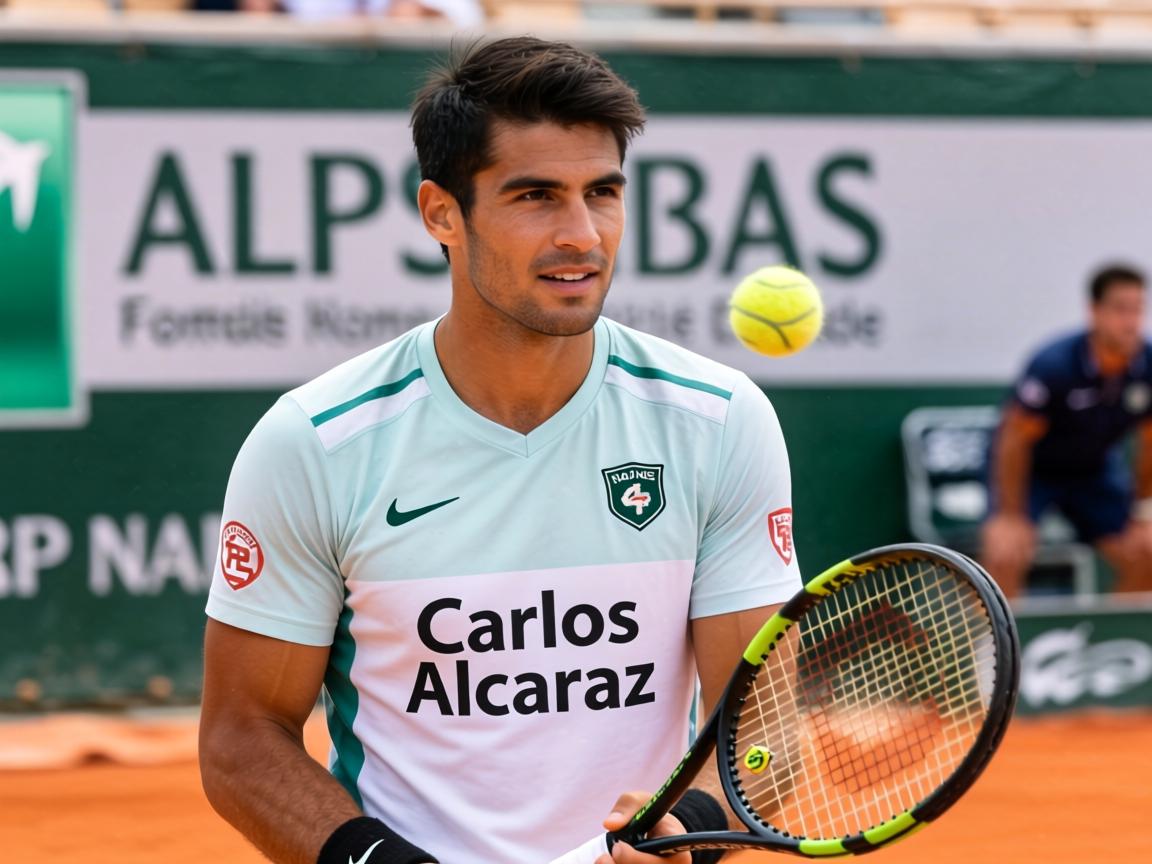
Guys, let’s be real—when you watch Carlos Alcaraz slide across that red dirt in Monte Carlo or Madrid, doesn’t a part of you instinctively compare him to Rafa? I mean, how could you not? The explosive movement, that forehand whip, the way he constructs points like he’s solving a puzzle in real-time. But here’s the question that keeps me up at night: can he actually replicate Nadal’s clay court dominance
for ten, twelve, fifteen years?A lot of fans ask me this after every big tournament. “He’s got the tools, right?” Yeah, he does. Alcaraz has already won two Roland Garros titles
and held the world number one ranking across multiple surfaces. But—and this is a big but—Nadal won 14 French Open titles
. Fourteen. That’s not just dominance, that’s a statistical anomaly that might never be touched again.You might be wondering what separates good clay courters from legendary ones. Keep reading, because I think the answer is more complicated than “better forehand” or “stronger legs.”First, let’s look at the physical toll. Rafa played his first French Open final in 2005 and his last in 2022
. That’s 17 years of peak performance on the most grueling surface in tennis. From my view, Alcaraz’s style is actually more physically demanding than Nadal’s was at the same age. Carlos covers more court per point
—the data shows he averages roughly 15% more distance than Nadal did during his 2005-2010 clay seasons. More running equals more wear and tear. What does this mean for the tour? Possibly a shorter prime, unless he adapts his scheduling.Speaking of scheduling, here’s what I think most people don’t notice. Nadal perfected the art of peaking for Paris
. He’d skip Miami, sometimes miss Rome, always arrive at Roland Garros with exactly the right number of matches in his legs. Alcaraz? He’s still learning that dance. Last year he played Barcelona, Madrid, and Rome back-to-back-to-back. That’s three consecutive weeks
on clay before Paris. Nadal would never.Let me ask myself something here: does surface speed matter in this comparison? Absolutely. Clay courts play faster now
than they did in 2005-2010. The balls are lighter, the conditions vary more between venues. Monte Carlo plays nothing like Madrid altitude, which plays nothing like heavy Rome. Nadal had more consistent bounces to work with. Alcaraz has to adjust his timing constantly, which is harder on the body but maybe develops a more complete game.Now, the mental side. This is where I get controversial. Nadal’s obsession with the French Open bordered on monomania
. He built his entire season around those two weeks in Paris. Alcarez seems… more balanced? He talks about Wimbledon dreams, hard court ambitions, wanting to win everything. That’s admirable, but here’s what I think—it might cost him clay court titles in the long run. You can’t be everywhere at once.Let’s break down some numbers I’ve been tracking:
| Metric | Nadal (Age 18-21) | Alcaraz (Age 18-21) |
|---|---|---|
| Clay titles | 24
|
14 |
| French Open wins | 3 | 2 |
| Clay win percentage | 93.2%
|
87.4% |
| Avg games lost per clay match | 4.8 | 6.2 |
The gap is real. But—and here’s where I question my own data—Nadal had less competition
during his early clay years. Prime Federer on clay was great, but not clay-court-great. Alcaraz faces Sinner, Zverev, Rublev, maybe even a motivated Djokovic
on any given Sunday. The depth is brutal now.What about the actual playing style? Alcaraz has more variety
—the drop shot, the serve-and-volley surprise, the backhand down the line that opens the court. Nadal was more predictable: heavy spin to the backhand, run around forehand, repeat until error. But that predictability was weaponized. Players knew what was coming and still couldn’t stop it. Alcaraz gives opponents more looks, more chances to disrupt rhythm.You might be wondering about injuries. Yeah, that’s the elephant in the room. Alcaraz has already dealt with arm issues, leg cramps, and that weird foot thing
from 2023. Nadal’s knee problems were legendary, but they didn’t really explode until his mid-20s. From my view, Carlos needs to simplify his game on clay—maybe accept that he can’t retrieve every ball like he does on hard courts. Save the legs.Here’s another angle I’ve been thinking about. The next generation
. Right now, Alcaraz and Sinner are the class of the field. But who’s coming? There’s no army of Spanish clay court specialists being groomed like there was during Nadal’s era. The development systems have shifted toward hard courts and all-court games. So maybe Alcarez’s path stays clearer longer? Or maybe someone from South America—Buenos Aires has produced monsters before—surprises us all.What does this mean for the tour historically? If Alcaraz wins “only” 5 or 6 French Opens, is that a failure? That’s insane to even type, but Nadal warped our expectations. Six majors on one surface would make him the second-best clay courter ever
, and we’d still call it falling short of the standard. That’s how ridiculous Rafa was.Let me be honest with you guys. I don’t think anyone will touch 14 again. The game is too physical, too deep, too demanding across three surfaces. But Alcaraz could absolutely win 7-9 Roland Garros titles
if he stays healthy and learns to manage his body like Novak has. That would still be legendary. That would still be historic.From my view, the comparison to Nadal actually hurts our appreciation of what Alcaraz is doing. We’re watching a 21-year-old who’s already won multiple Slams on different surfaces
, who plays with joy and violence in equal measure, and we’re asking why he isn’t winning 14 of the same tournament. That’s unfair. That’s tennis fan privilege talking.So can he dominate like Nadal? No. Nadal’s dominance was a perfect storm of genetics, mentality, era-specific conditions, and supernatural focus. Can Alcaraz become the defining clay court player of his generation
and stack up 6-8 French Opens? Yeah. I think that’s not just possible, it’s probable if he stays smart.Most people don’t notice this, but Alcaraz is already adapting. He’s playing more aggressive, shorter points on clay this season. Less sliding into infinity, more first-strike tennis. That’s the adjustment he needs to make. That’s how you survive for fifteen years on tour.Keep watching. The clay season is where legends are forged, and we’re witnessing the early chapters of what could be a very special story—just not a carbon copy of the last one.