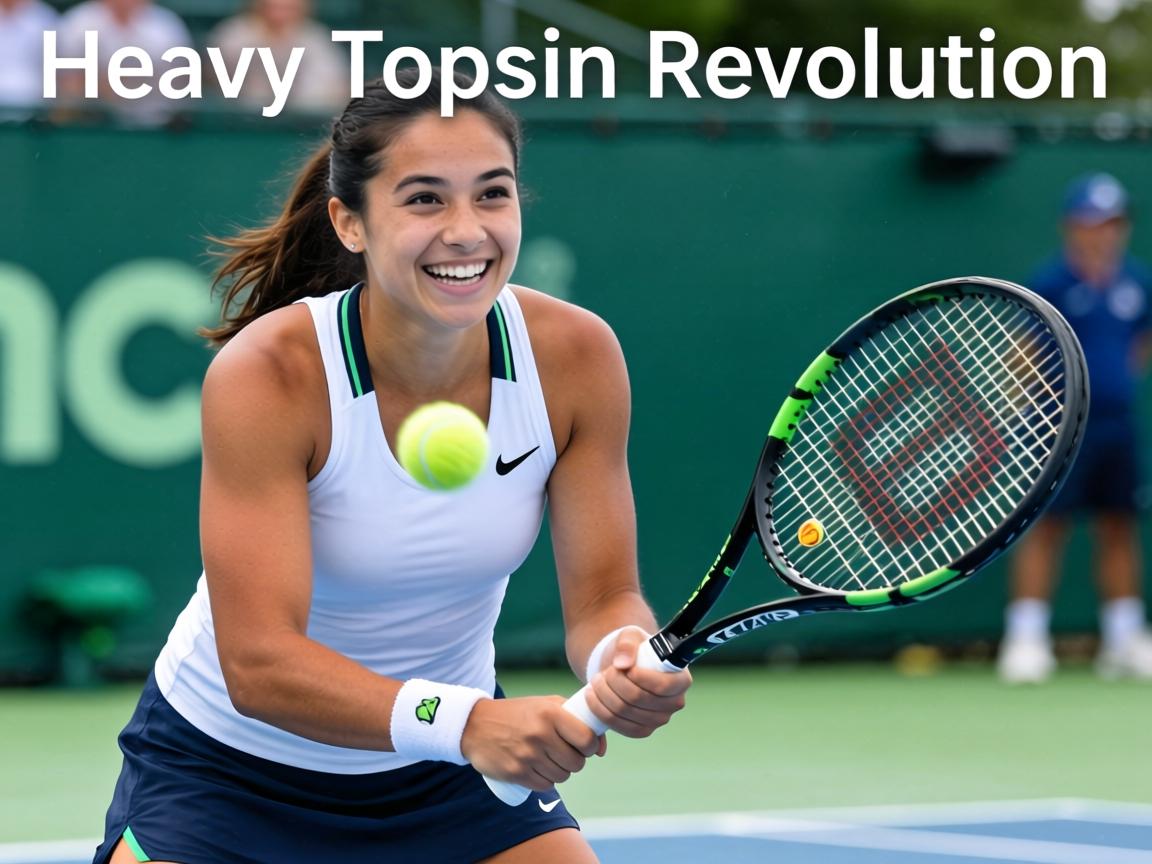
Guys, when was the last time you watched a five-set thriller at Roland Garros and didn’t see at least forty moonball exchanges per set? I mean, the heavy topspin forehand
has become so dominant that clay court tennis sometimes feels like watching two guys play vertical ping-pong from eighty feet apart. A lot of fans ask whether this tactical shift—driven partly by equipment, partly by coaching philosophy—is sucking the creativity out of professional matches.Let’s be real here. The Nadal template
changed everything. That extreme western grip, the lasso-whip finish, the way he bends shots around the court like they’re defying physics—every academy from Barcelona to Boca Raton tried cloning it. But here’s what I think most analysis misses: it’s not just about copying technique, it’s about risk calculation. When you can generate 3000+ RPM on a forehand
and keep the ball three feet over the net, why would you ever flatten out a winner and risk the tape?You might be wondering about the data behind this shift. Check these trends from ATP tracking over the past fifteen years:• Average rally length on clay
: increased from 6.2 shots (2008) to 8.4 shots (2024)
• Net approaches per match
: dropped roughly 60% across all surfaces since 2010
• Forehand RPM leaders
: now averaging 25-30% more spin than generation-previous baselinesWhat does this mean for the tour? Well, from my view, we’re seeing homogenized playing styles
that prioritize physical endurance over point construction. I watched a Madrid Open match last season where both players had identical backhand slices, identical kick serves, identical patterns—just waiting for the other guy to blink first after twenty shots. Tactical diversity used to mean something. Now it’s about who can outlast whom in the grinding baseline war
.Keep reading, because the surface evolution plays into this too. Most people don’t notice that court pace has slowed dramatically
even on grass and indoor hard courts. Wimbledon changed their grass composition in 2001, and suddenly serve-and-volley became a museum piece. The balls got heavier, the bounces higher, which perfectly suits that heavy topspin game. It’s not that players can’t attack—it’s that the conditions punish aggression more than they used to.The junior development angle worries me more than the pros, honestly. I visited a USTA regional training center
last fall and watched twelve-year-olds hitting with western grips so extreme they could barely handle low balls. Coaches explained they’re “building weapons early.” But what happens when these kids face someone who actually varies pace and height? I saw one promising player completely unravel against a junk-balling counterpuncher
because he’d never learned to adjust his swing path mid-match.Here’s the counter-argument worth considering, though. Maybe predictability isn’t boredom? The Chess Match on Grass
narrative—that’s what some broadcasters call these extended rallies. There’s tension in watching two athletes probe for microscopic openings over twenty-shot exchanges. I get that. But from a fan engagement perspective, the casual viewership data
tells a different story. Average match watch time on streaming platforms drops significantly during extended baseline rallies compared to serve-and-volley sequences or net finishes.You might be wondering whether equipment restrictions could restore balance. The ITF has experimented with larger balls
to reduce spin effectiveness, and some veterans advocate for court speed increases. But here’s the practical problem: tournament directors love longer rallies because they create more television advertising breaks
and perceived value for expensive seats. Slower courts = longer matches = more revenue. The economic incentives align perfectly with the topspin revolution, unfortunately.What about the physical toll? This gets overlooked in “evolution of the game” discussions. The rotational forces
on shoulders and wrists from extreme topspin generation are brutal. We’ve seen an uptick in labral tears and wrist extensor injuries
among players under twenty-five that barely existed in the serve-and-volley era. The body pays for that tactical “safety” in ways that might shorten careers. I talked to a physiotherapist who works with ATP players, and he estimated 30% more maintenance hours
required now compared to fifteen years ago just to keep shoulders functional.From my view, the solution isn’t banning western grips or mandating faster courts. It’s about coaching diversity
—actually teaching young players multiple tactical identities instead of defaulting to the “grinder with one big shot” template. Think about how Federer’s versatility
or Swiatek’s net comfort
(when she uses it) creates matchup problems that pure baseliners can’t solve. That variety makes tournaments unpredictable, which makes them compelling.The betting markets
actually reflect this predictability issue, by the way. Algorithmic models perform significantly better on clay court matches than grass because the variables are more consistent. When everyone plays the same way, outcomes become easier to forecast. Is that good for the sport? Depends who you ask—the daily fantasy sports
crowd probably loves it, but traditionalists watching for surprise and drama get shortchanged.So is heavy topspin killing excitement? Not entirely. Matches like the Alcaraz-Sinner US Open semifinal
last year proved that athletic baseline exchanges can still thrill when both players have multiple gears. But those exceptions highlight the rule: most tour-level encounters now follow scripts written years ago by academy systems prioritizing percentage tennis over instinctive shot-making
.What I’d love seeing—probably won’t happen, but still—is a surface diversity renaissance
. Imagine if the tour calendar actually alternated court speeds dramatically week-to-week, forcing players to maintain tactical flexibility. The old carpet events, faster indoor hard courts, maybe even experimented wood surfaces. Right now the homogenization extends beyond playing styles to the very ground beneath their feet.Keep that in mind next time someone tells you “the game evolves naturally.” Some evolution is selection pressure from economics and technology, not pure competitive optimization. The heavy topspin era isn’t bad tennis—it’s just narrower tennis than what came before. And narrower usually means less room for the weird, wonderful outliers that make sports memorable.