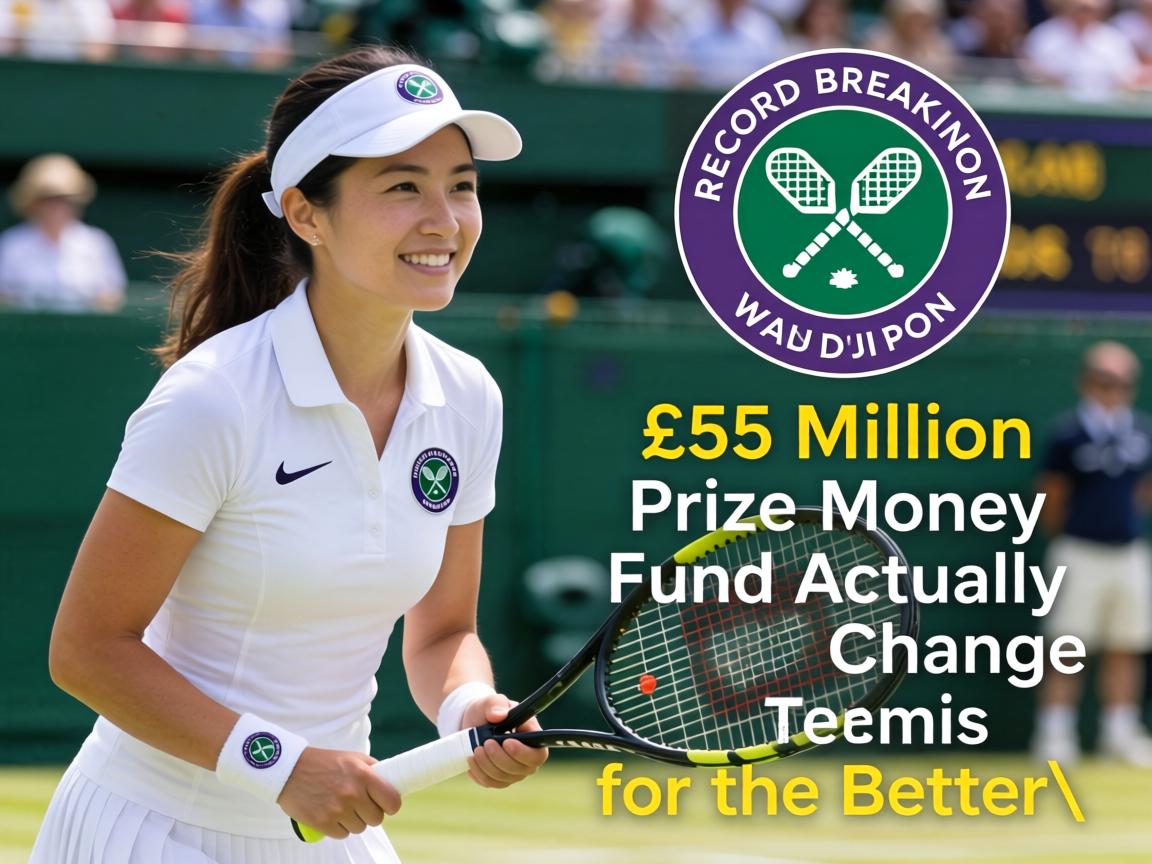
Guys, let’s be real—when you hear that Wimbledon is pumping £55 million
into prize money for 2026, your first thought is probably “good for the players,” right? But here’s what I think is actually going on beneath the surface. The All England Club announced this 15% increase
back in February, making it the highest-paying tennis tournament in the world right now . That’s not just inflation adjustment; that’s a power move.You might be wondering why Wimbledon specifically is doing this now. A lot of fans ask me whether this is about keeping up with the US Open or if there’s something bigger happening with player unions and the PTPA. From my view, it’s both. The tournament runs from June 29 to July 12
this year , and they’re already seeing record ticket demand with over 1.8 million ballot requests
for just 500,000 public tickets . When you’ve got that kind of leverage, you flex it.Breaking Down the Numbers That Matter
Let me show you exactly how this breaks down because most people don’t notice the details:
| Stage | 2026 Prize Money | 2025 Prize Money | Increase |
|---|---|---|---|
| Singles Winner | £3,000,000 | £2,700,000 | +11.1% |
| Runner-Up | £1,520,000 | £1,400,000 | +8.6% |
| First Round Loser | £66,000 | £60,000 | +10% |
| Qualifier Round 1 | £15,500 | £12,800 | +21% |
See that last line? The qualifiers getting the biggest percentage bump. That’s not accidental. Wimbledon knows that the grind from Futures and Challengers up to the main draw is brutal, and they’re finally acknowledging it financially.What Does This Mean for the Tour?
Keep reading, because this is where it gets interesting. Carlos Alcaraz already posted his appreciation on social media, which makes sense—he’s defending his title and stands to pocket £3 million
if he repeats . But here’s the strategic angle: by pushing total compensation past the US Open and Australian Open, Wimbledon is essentially forcing the other Slams to match or exceed these numbers.Is that good for tennis? Honestly, I’m split. On one hand, players ranked 80-150 who scrape by on tour finally get meaningful paychecks for losing in the first round. £66,000
covers a lot of coaching, travel, and physio expenses . On the other hand, this widens the gap between the haves and have-nots in terms of tournament prestige. Non-Slam events can’t compete with these purses, which might warp the entire calendar.The Equal Pay Conversation
You might be wondering about the gender split here. Since 2007, Wimbledon has paid men and women equally , and this year’s increases maintain that. Both singles champions get £3 million
, both doubles teams get £680,000
per pair .But here’s what I think most coverage misses: equal prize money doesn’t mean equal opportunity to earn it. The women play best-of-three sets at Wimbledon while men play best-of-five . I’m not saying that’s unfair—just that the “equal work” argument gets complicated when the physical demands differ. A lot of fans ask whether this structure actually benefits the women’s game or if it creates different pressures.The Grass Court Economics
Wimbledon’s unique position as the only remaining grass Slam lets them do this. Their broadcast deals and sponsorships are premium because there’s literally no other tournament like it . The grass courts, the all-white dress code, the ivy-covered walls—it’s a package that sells.From my view, this creates a weird dynamic where the other surfaces get less investment. Clay and hard court specialists make less money simply because their surfaces host less prestigious events. Most people don’t notice this inequality because it happens slowly, year by year, as Wimbledon keeps raising the bar.The Dark Side of Big Money
Here’s what I think is problematic: when first-round losers get £66,000
, there’s less incentive to grind on the Challenger circuit. I’ve heard whispers that some players actually prefer bombing out in Slam qualies to winning 25K events. That can’t be good for the sport’s competitive integrity.Plus, the wheelchair and quad divisions, while seeing increases, still get fractions of what able-bodied players earn. £68,000
for wheelchair singles champions versus £3 million
for the main draw . The percentage growth is there, but the absolute gap is staggering.My Honest Take
Will this £55 million fund change tennis for the better? Short term, absolutely. Players will be less stressed about finances, which should improve performance quality. The qualifier prize bumps specifically help the tour’s middle class survive.But long term? I’m skeptical. We’re creating a two-tier system where Slam events become everything and the rest of the calendar feels like a warmup. That’s not healthy for a global sport that needs strong events in places like Buenos Aires, Stockholm, and Tokyo.What does this mean for the tour? It means the 2026 season will be defined by who can peak for the four weeks that matter most. Sinner, Alcaraz, Swiatek, Sabalenka—they’re all chasing these massive paydays . The intensity at Slams will be insane, but I worry about the months between them.The Questions I’m Still Wrestling With
You might be wondering: does prize money actually correlate with better tennis? Or does it just attract more betting interest and commercial pressure? When Debbie Jevans says this “reflects our commitment to the players” , I believe her, but I also see the business calculation.Also, what happens if Wimbledon has another rain-soaked year? They spent millions on those retractable roofs
for Centre Court and No. 1 Court specifically to guarantee play . That infrastructure investment plus the prize money increases tells me they’re positioning for something bigger—maybe an expanded format or a fifth Slam? Sounds crazy, but the money flowing into tennis right now is unreal.Final Thoughts
Most coverage of this prize money news is just celebratory. “Players get paid more, great!” But here’s what I think is worth watching: will the ATP and WTA use this as leverage in their ongoing negotiations with the other Slams? Will we see a prize money arms race that eventually forces Roland Garros and the US Open to break £60 million?From where I’m sitting, Wimbledon just moved the goalposts. The 2026 Championships will be richer than ever, but the sport’s economics just got more complicated. Whether you’re a fan of the big servers on grass or the clay court grinders, this affects everyone.Drop your thoughts below—do you think players should earn this much, or is the money getting ridiculous?