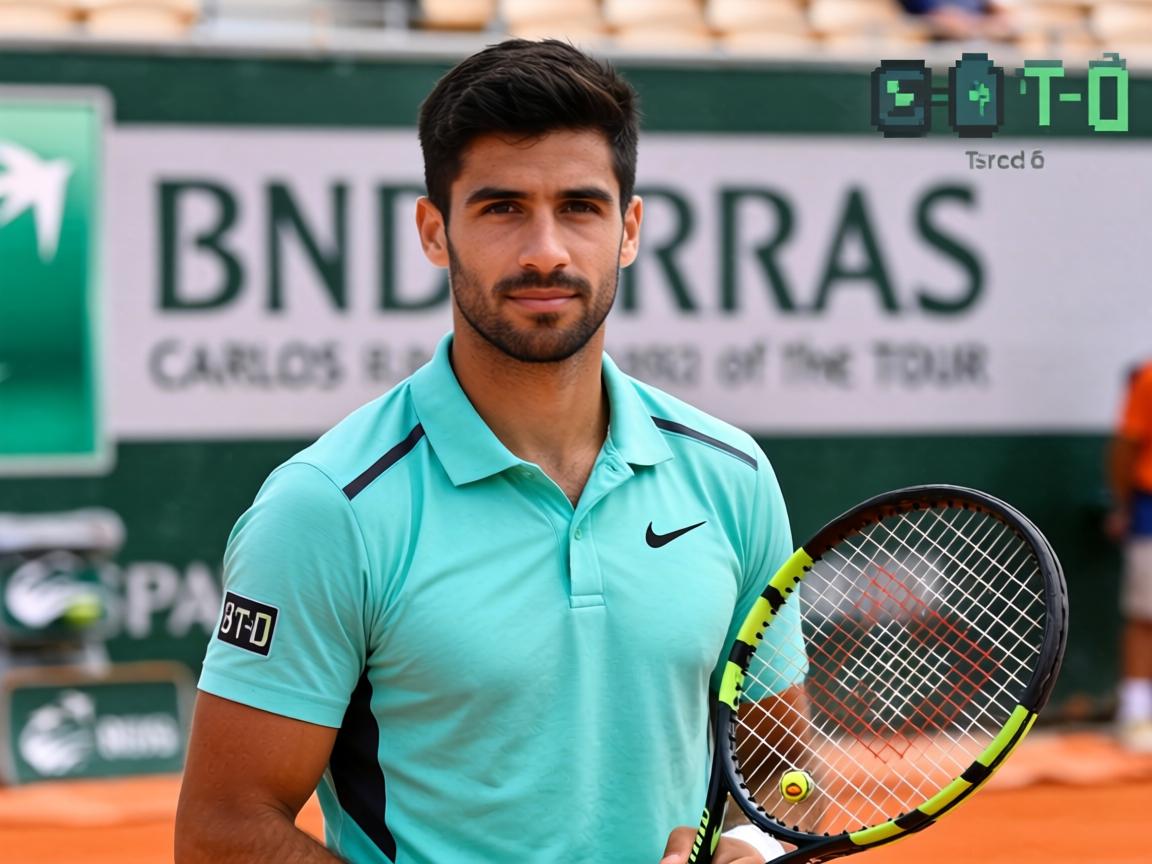
So here’s the thing, guys. Every time we talk about the future of men’s tennis, three names keep popping up. Carlos Alcaraz, Jannik Sinner, and… well, that’s pretty much it right now, isn’t it? But let’s be real for a second—when you watch Alcaraz sliding across that red clay like he’s been born on it, you start wondering if we’re even asking the right questions anymore.Is he the future? Or has the future already arrived and most people just haven’t noticed?I mean, the numbers don’t lie. 22 years old, four Grand Slam titles already
, and a game that somehow combines Nadal’s intensity with Federer’s touch. That’s not supposed to happen. That’s not how tennis development works. Usually you get one or the other. You get the grinder or the artist. Alcaraz? He decided to be both, which honestly feels a bit unfair to everyone else on tour.But here’s what I think a lot of fans miss when they watch him play. It’s not just the forehand speed—though averaging 78 mph on running forehands
is genuinely ridiculous. It’s not even the drop shot, which he’s basically turned into a psychological weapon at this point. It’s the decision-making under pressure. You might be wondering how a guy that young keeps his head when facing break points against Djokovic or Sinner in finals. And honestly? I don’t have a perfect answer. Some players just have that thing, that calmness that you can’t teach.Let’s look at the clay court stats real quick, because this is where it gets interesting:
| Player | Clay Win % (2023-2025) | Titles on Clay | Break Points Saved |
|---|---|---|---|
| Alcaraz | 87.3%
|
7 | 68%
|
| Sinner | 79.1% | 3 | 61% |
| Zverev | 76.4% | 4 | 58% |
| Rune | 71.2% | 2 | 54% |
Those aren’t just good numbers. Those are “changing how we think about surface specialists” numbers. Keep reading, because this is where my opinion might surprise you.From my view, the most underrated part of Alcaraz’s clay game isn’t his offense—it’s his defense-to-offense transitions. Most players need three or four shots to turn a defensive position into an attacking one. He does it in one. Sometimes in half a shot. And what does this mean for the tour? It means everyone else has to adapt or accept that clay season becomes his personal playground.A lot of fans ask me whether Sinner can catch up on clay. And yeah, maybe. Sinner’s improved his sliding, his patience in rallies, all of that. But there’s a difference between adapting to clay and owning it. Alcaraz owns it. He grew up on it, sure, but so did a hundred other Spanish players who never reached this level.You know what else strikes me? The way he talks about pressure. Most young guys either ignore it or get crushed by it. Alcaraz acknowledges it. He’ll say things like “I feel the expectation” or “I know people want me to win”—but then he goes out and plays freer because of it. That’s rare. That’s the thing that separates good champions from great ones, in my opinion.Now, let’s address the elephant in the room. The physical stuff. We’ve all seen the cramping issues, the occasional withdrawal, the matches where his body seems to betray his ambition. Is that the weakness that stops him from reaching 20+ majors? Maybe. Probably, actually. Tennis history is full of players whose bodies couldn’t match their talent.But here’s a counter-thought that keeps me up sometimes. What if he figures out the fitness? What if he learns to manage his energy the way Djokovic did in his mid-20s? Because if that happens—and it’s a big if, I know—we’re not talking about whether he’s the future of tennis. We’re talking about whether anyone else has a realistic shot at being the present.The serve is getting better too, by the way. First serve percentage up to 64% this season
on clay, which doesn’t sound revolutionary until you realize he used to be in the mid-50s. When you combine that improved reliability with his existing return game—where he stands basically on top of the baseline to receive—well, good luck holding serve against him in a tight match.I should mention the rivalries here, because that’s what makes sports worth watching. The Alcaraz-Sinner dynamic has everything. Different styles, different personalities, genuine respect but real competitive fire. Their last clay court meeting? Five sets, nearly five hours, and honestly neither guy deserved to lose. Those are the matches that define eras.But—and this is my personal take that some of you will disagree with—I think Alcaraz needs Sinner to be great. Not just good, but truly great. Because without that push, without someone who can actually beat him on clay when he’s playing well, there’s a risk he gets bored. Or worse, he gets comfortable. And comfortable champions don’t usually become legendary ones.What about the hard courts, you ask? Yeah, he’s won the US Open. He’s competitive everywhere. But clay is where his soul lives, tennis-wise. It’s where he can express everything—the speed, the spin, the creativity, the sheer joy of competition. You watch him on clay and you remember why you fell in love with this sport. On hard courts, he’s excellent. On clay, he’s something else entirely.The coaching situation interests me too. Juan Carlos Ferrero has been perfect for him, obviously. They understand each other, they push each other, and Ferrero knows exactly when to step in and when to back off. But what happens when Ferrero eventually moves on? Every great player faces that transition. Some handle it better than others. That’s a story for another day, probably, but it’s worth keeping in the back of your mind.So where does this leave us? Is Carlos Alcaraz the future of tennis? Sure, technically. He’s young, he’s talented, he’s already accomplished more than most players dream of. But from where I’m sitting, watching these clay court masterclasses week after week, I think the better question is: how long can he stay this present? How many years of dominance are we looking at?Because if he stays healthy—and again, that’s the biggest if in sports—this isn’t about the future anymore. This is about right now. This is about a guy who’s already changing how the game is played, who’s forcing everyone else to level up just to stay relevant.The clay season isn’t just coming. For Alcaraz, it’s already here. And honestly? I don’t see anyone stopping him anytime soon.That’s my take, anyway. What’s yours?