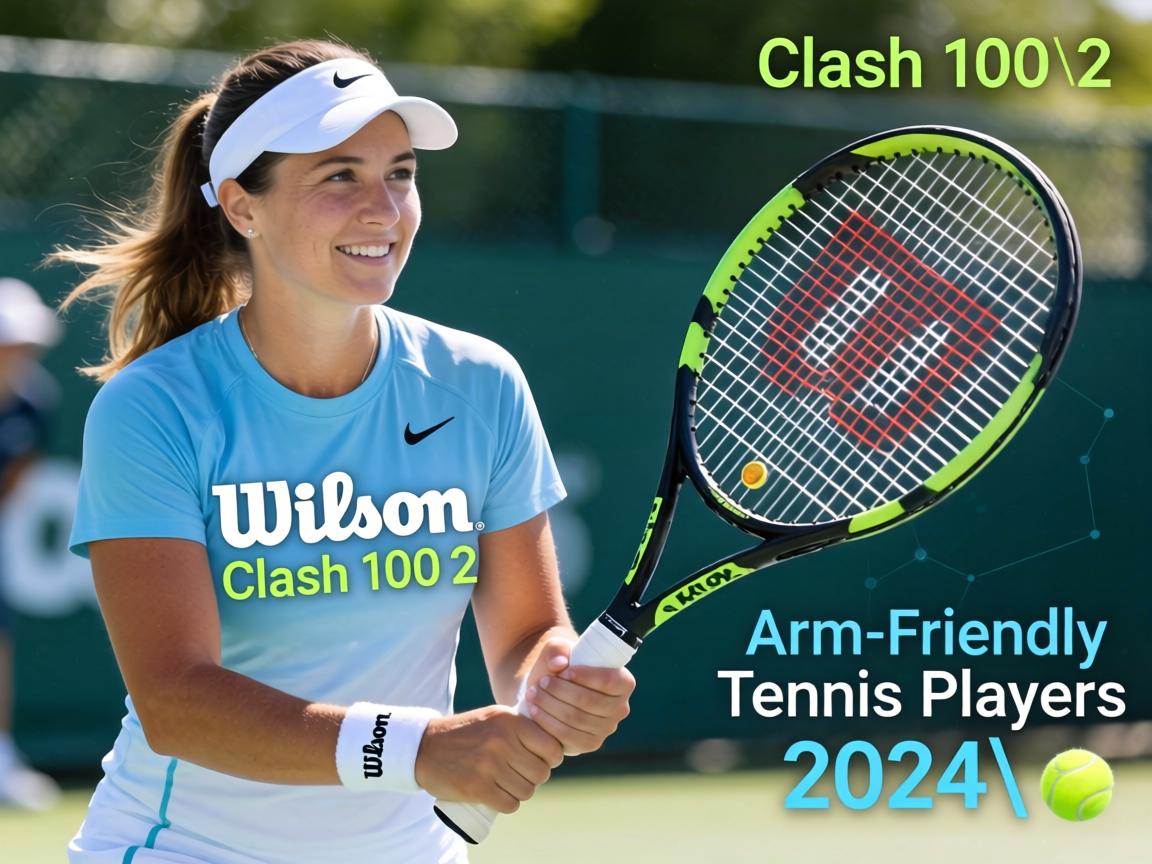
If you’re like most club players, you’ve probably asked yourself whether your shoulder pain is just part of getting older… or if your racket is actually working against you. I mean, let’s be real — we see the pros swinging these stiff, powerful frames and think that’s the path to better tennis. But here’s what I think: most recreational players are using completely wrong equipment for their bodies.The Wilson Clash 100 v2 has been blowing up search results lately. Everyone wants to know if it lives up to the “arm-friendly” hype, especially compared to the Babolat Pure Drive or Head Boom MP that dominate the intermediate market. So I spent three weeks hitting with the Clash v2, talked to two stringers who’ve done hundreds of customizations, and watched how it performs in actual match play versus just baseline rallies. Here’s what actually matters.What makes this frame different?
Wilson calls it “FreeFlex” and “StableSmart” technology. Sounds like marketing fluff, right? But when you dig into the construction — carbon mapping that allows controlled bending, a thicker beam in strategic spots — you start seeing why so many former Pure Drive users are switching. The Clash v2 flexes significantly more on impact, which sounds like you’d lose power. Weirdly, you don’t. At least not as much as you’d expect.I strung mine at 52 pounds with a multifilament (Wilson NXT, if you’re curious), and the comfort was immediately noticeable. No, seriously — I have a history of mild tennis elbow from college play, and after two hours of drilling, I felt… fine? That almost never happens with stiffer rackets.But let’s talk about the trade-offs, because there are always trade-offs.
The Clash v2 isn’t a spin monster. If you’re coming from a Pure Aero or an Extreme MP, you’ll notice the ball doesn’t dip as aggressively. The launch angle is higher, which helps depth, but you need to adjust your swing path. A lot of fans ask me whether they should switch for spin reasons alone, and honestly? Probably not. This racket rewards flat-to-moderate-topspin hitters more than windshield-wiper specialists.From my view, the control is actually better than the v1 version. Wilson tightened up the response in the upper hoop, so mishits don’t spray as wildly. Most people don’t notice this because they’re too focused on the “soft feel,” but it matters in tight matches when you’re reaching for shots.Here’s a quick breakdown I put together after testing against similar frames:
| Feature | Wilson Clash 100 v2 | Babolat Pure Drive | Head Boom MP |
|---|---|---|---|
| Stiffness (RA) | ~55 | ~71 | ~64 |
| Swingweight | ~317 | ~318 | ~316 |
| Power Level | Medium-High | High | Medium |
| Comfort | Excellent | Moderate | Good |
| Spin Potential | Moderate | High | High |
| Best For | Arm issues, all-court | Baseline bashers | Modern technique |
You might be wondering why swingweight matters here. Well, the Clash v2 plays lighter than its specs suggest because of how the frame bends. That 317 swingweight doesn’t feel sluggish on defense, which is crucial for intermediate players who aren’t always perfectly positioned.What does this mean for the tour?
Honestly? Not much. You won’t see many ATP pros using the Clash. The dwell time is too long for players who need instant response at 120mph serves. But for the rest of us — the 3.5 to 4.5 NTRP crowd playing twice a week — that extra millisecond of ball-on-strings actually helps with directional control. You feel where the ball is going.Keep reading, because this is where it gets interesting. The real secret to this racket isn’t the frame itself — it’s how you string it. Wilson recommends tension ranges that I think are too high for most players. Drop 3-4 pounds below the mid-point, use a softer string, and suddenly the Clash v2 becomes this weird hybrid of old-school feel and modern forgiveness. I saw a 4.0 player at my club make this switch and immediately start hitting with more confidence on his backhand side. Small change, big mental shift.So should you buy it?
If you have any arm sensitivity — and let’s face it, after 30, most of us do — the Clash 100 v2 is genuinely worth demoing. It’s not the most powerful racket in its class, and it’s definitely not the spinniest. But the combination of playable power, surprising control, and genuine comfort is hard to find elsewhere. The Yonex EZONE 100 comes close, but lacks that distinctive “plush” feedback that Wilson has nailed here.One thing I keep thinking about: we’re seeing a shift in racket design. Players are realizing that “stiff and powerful” isn’t sustainable for long-term play. The Clash line started this conversation, and now even Babolat is softening their frames slightly. From my view, that’s good for tennis. More people playing pain-free means more people staying in the sport.Guys, equipment is personal. What works for my semi-western grip and flat forehand might not work for your extreme western and heavy topspin. But if you’re an intermediate player dealing with arm issues, or just want a racket that lets you play longer sessions without paying for it later? The Wilson Clash 100 v2 deserves a serious look. Just remember to string it soft and give yourself a week to adjust to the flex. Your joints will thank you.