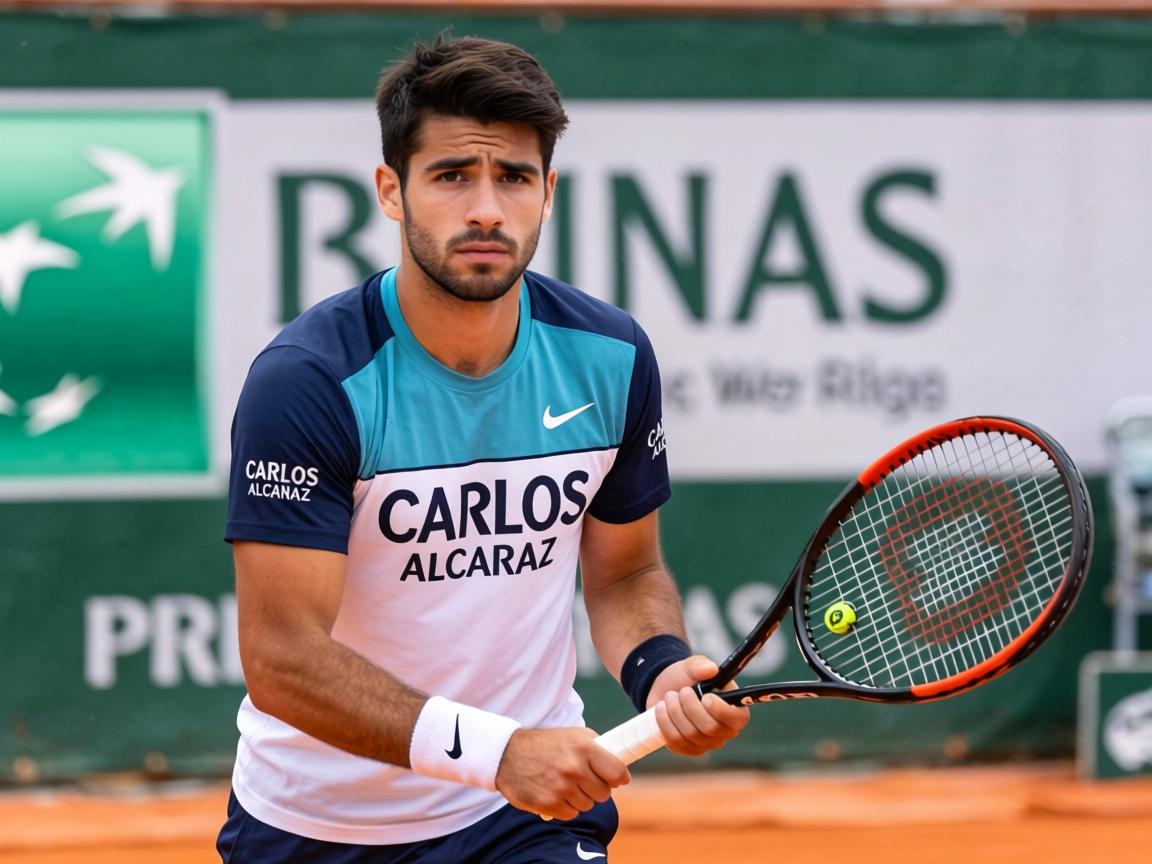
Guys, let’s be real for a second. When Carlos Alcaraz burst onto the scene winning Barcelona
, Madrid
, and then that insane 2022 US Open
, everyone called him the future of tennis. The “next Nadal”
tags came flying. The forehand speed
, the drop shots from the baseline
, the sprinting defense
—it was electric. But now, watching him grind through three-setters on clay in Monte Carlo
and Barcelona
, I keep wondering… is this sustainable? Or are we watching a ticking time bomb?I’ve followed the clay season for about fifteen years now, and honestly? Alcaraz plays clay like it’s hard court. That’s both brilliant and slightly terrifying.The Numbers Don’t Lie (But They Don’t Tell Everything)
Let’s look at his 2024 clay stats
. Through Rome
and Roland Garros
, Alcaraz was winning 78% of points at the net
—highest on tour. His average rally length
on clay? Just 4.2 shots
. Compare that to Casper Ruud
at 6.8 shots
or even Djokovic
this season at 5.5
. The kid is ending points fast. Really fast.But here’s what I think about those numbers. Yes, he’s efficient. Yes, he’s entertaining. But clay is supposed to be the surface that rewards patience. The long rallies
, the physical chess match
, the mental grind
—that’s what separates champions from pretenders on dirt. Alcaraz is bucking that trend completely.Why It Works (For Now)
You might be wondering, if he’s winning, who cares about tradition? Fair point. His heavy topspin forehand
—we’re talking 3200 RPM on average
—bounces high enough to push opponents back, then he sneaks forward and drops the hammer. Or literally drops a shot. His touch at net
is unreal for a 21-year-old. Most guys that age are baseline robots.Plus, let’s talk about that speed
. He covers the court like he’s on a hard court, sliding into forehands, recovering for the next ball. It’s not traditional clay court movement—more explosive, less gliding
. But it works because opponents can’t settle into rhythm. Ruud told reporters after their Barcelona final
that Alcaraz “doesn’t let you breathe.” That’s the point.The Injury Question Everyone’s Ignoring
Okay, here’s where I get concerned. A lot of fans ask me about his physical durability. And honestly? The 2023 arm issues
, the 2024 back problems
in Australia, the way he occasionally grabs at his left leg
after long matches… it adds up.Clay is brutal on the body. The sliding
, the stopping
, the twisting
—it punishes joints differently than hard courts. Nadal survived because he built his game on controlled aggression
, not constant explosion. He managed his body like a Formula 1 team manages an engine. Alcaraz? He drives like it’s a rally car race. Every single point.From my view, the tour is watching this experiment in real-time. Can you play high-intensity, all-court tennis
on clay for fifteen years? We don’t know. Nadal couldn’t sustain his early style—he adapted, became more selective. Alcaraz will have to do the same, or his shelf life might be shorter than we want.What Does This Mean for Roland Garros?
Keep reading, because this is where it gets interesting. Roland Garros is different. Best-of-five sets
, the heavy conditions
, the pressure
—it exposes everything. In 2023
, Alcaraz cramped against Djokovic in the semifinals. Physical meltdown at the worst moment. Some called it nerves, but I watched that match three times. It was depletion
. He’d spent the whole tournament playing 110% every point
, and his body tapped out.This year, he needs to learn energy management
. Pick his spots. Not every point needs to be a highlight reel. The drop shot
is a weapon, but use it strategically, not compulsively. Djokovic and Sinner
(if he’s healthy) won’t chase forever—they’ll start anticipating, passing, making him pay.The Comparison Nobody Asked For
Most people don’t notice this, but Alcaraz’s clay game actually reminds me more of Novak circa 2011
than Nadal. Prime Djokovic attacked clay, took time away, dictated with his backhand. He didn’t wait for errors; he forced them. Alcaraz does the same, just with more flash and less margin.But Djokovic developed that style over years, adding layers of defense and patience. Alcaraz is trying to run before he can walk, stylistically speaking. It works because he’s young and his body recovers fast. At 21
, you can abuse yourself. At 26
, 28
, 30
? The bill comes due.So… Is It Sustainable?
Here’s what I think. Yes and no. The style is sustainable if he adapts. If he keeps playing every point like it’s match point at Wimbledon
, he’ll burn bright and burn fast. We’ve seen it before—Del Potro’s wrists
, Murray’s hip
, Nadal’s knees
(though he adapted magnificently). Tennis history is littered with players who couldn’t modify their physical approach.But if Alcaraz learns to manage rallies
, to accept some neutral exchanges
, to save the explosive stuff for big moments
? Then he’s unstoppable on any surface. Clay becomes just another place where his versatility dominates.The Bottom Line for Fans
What does this mean for the tour? It means we’re in for a fascinating five years. Either Alcaraz proves that modern athleticism
has changed what’s possible on clay, or he becomes a cautionary tale about pushing the envelope too hard.My advice? Enjoy the show now. Watch those running passing shots
, the tweener lobs
, the volley winners
. But don’t be shocked if, in a few years, we see a slightly different Carlitos. One who picks his moments, who slides less and steps in more, who realizes that winning ugly
on clay is still winning.From my view, that’s the evolution of a champion. Nadal learned it. Djokovic learned it. Even Federer
learned it late in his career. Alcaraz is next in line, whether he knows it yet or not.The clay season will tell us everything. Monte Carlo
, Barcelona
, Madrid
, Rome
, Paris
—each tournament tests something different. This year, I’m watching not just for winners and losers, but for signs of adaptation. Does he shorten practice sessions? Does he skip a tournament to rest? Does his team talk about longevity
instead of just titles
?Those are the questions that matter, guys. Because talent is undeniable—Alcaraz has buckets of it. But wisdom
? That takes time, and sometimes, a few hard lessons.Let’s see if Roland Garros 2025 teaches him one, or if he teaches the rest of us that the rules have changed.